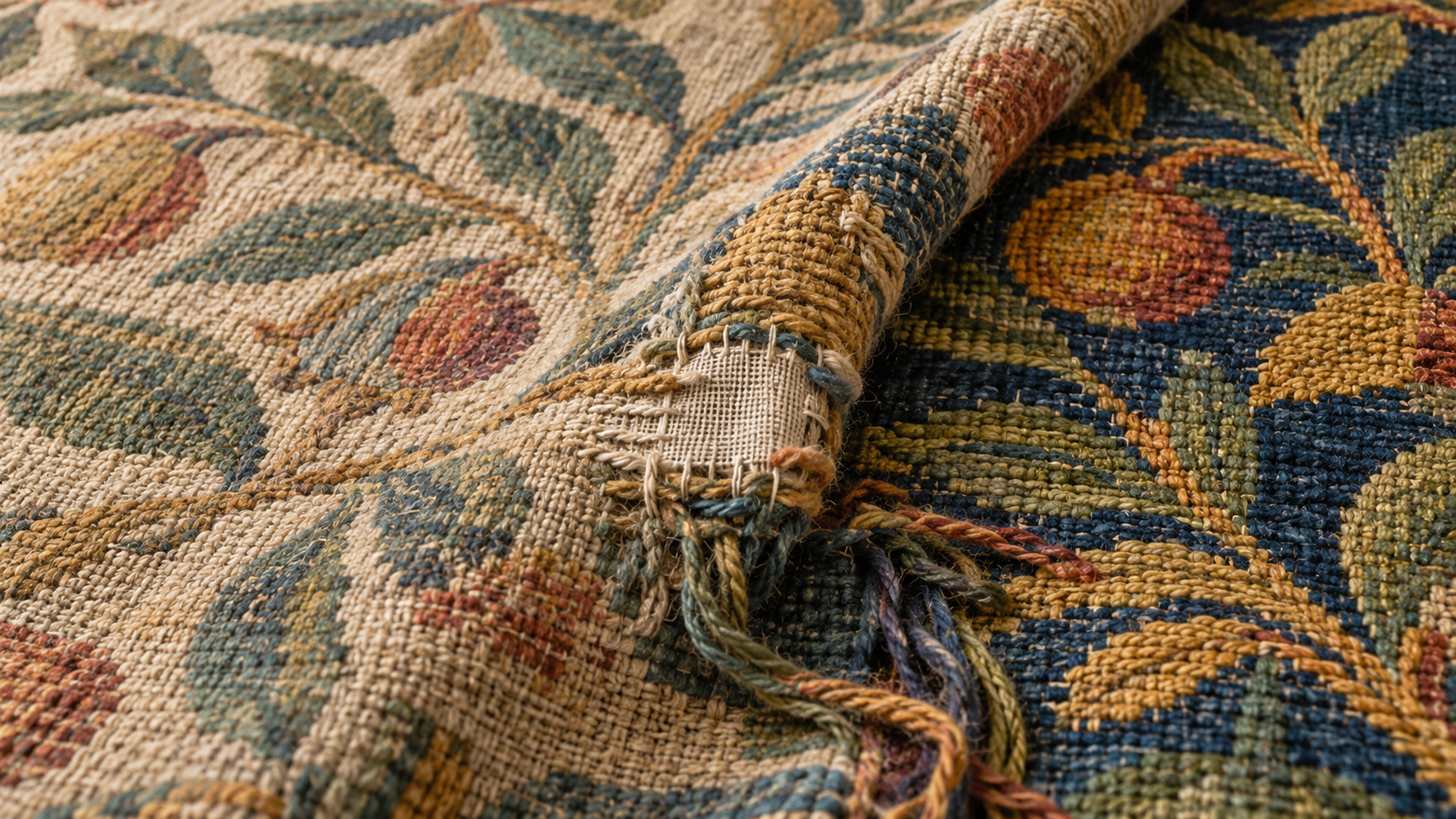
Turn a historical tapestry over and the colors may become startlingly stronger. The reverse, protected from some of the light that reached the front, can interrupt our expectation that old textiles belong to a permanently subdued world. It is tempting to call the back the original and the front a faded copy. That is too simple. Both sides have histories, and a brighter reverse is evidence to interpret rather than a time machine to enter.
The distinction matters because it changes what we ask conservation to do. Protecting surviving color, supporting weakened yarns, and reconstructing a past appearance are different tasks. A textile can benefit from the first two without needing the third.
The picture is also the structure
The V&A's explanation of tapestry describes a woven image in which colored weft threads build the design across warp threads. Tapestry is therefore not a picture merely resting on a neutral backing. The image-making material helps constitute the object. The museum also explains why protected reverses can retain stronger color. The V&A's account of tapestry technique makes the relationship between surface and structure clear.
That relationship gives a missing area two kinds of significance. A lost yarn can interrupt a figure or ornament while also weakening a local region. A repair that makes the picture look complete is not necessarily the same as a repair that supplies appropriate support. The visual and mechanical questions overlap, but they should remain distinguishable.
This also complicates our use of words such as backing or lining. A fabric behind a tapestry might carry load, protect it from dust, or serve another purpose. Looking only at the finished front can hide the different functions of materials that appear equally secondary to the image.
A colorant can outlast its support—or help damage it
In a Metropolitan Museum interview, textile conservator Cristina Carr and conservation scientist Nobuko Shibayama explain the roles of dyes, fibers, mordants, and environmental exposure. They describe fading as a chemical change that cannot simply be reversed. The account also discusses how metal-containing mordants and environmental factors can affect deterioration. The Met's discussion of tapestry dyes frames color as a material process rather than a fixed decorative attribute.
The consequence is a less nostalgic way of looking at a faded textile. Muted color is not automatically what its maker wanted, but neither is it a detachable veil that can be washed away. If the color-producing structure of a dye has changed, ordinary cleaning cannot restore the earlier molecule.
A brighter reverse helps establish the direction of change without supplying every detail of an earlier appearance. It may help us see relationships among colors and recognize that an overall brownish balance is historical alteration. It does not eliminate the need to understand the object's manufacture and exposure history. Any digital recoloring should therefore identify itself as an interpretation with a particular evidential basis.
A table carpet receives a second support
The V&A's conservation account of a Dutch table carpet, made between 1620 and 1650, describes losses concentrated in dark-brown wool. Removing its old lining exposed a reverse with stronger color. Treatment used linen support patches and several stitching techniques to secure weakened areas. A later loose cotton lining served as a dust cover rather than the structural support. The conservator's treatment account distinguishes these roles explicitly.
The account is satisfying for reasons that have little to do with a miraculous visual change. It shows how an intervention is assembled. A support fabric, carefully placed stitches, and a lining cooperate without pretending to become seventeenth-century weaving. The object's ability to be displayed depends on modern work whose identity is recorded.
There is no need to invent the emotions of its original users to find that process meaningful. The surviving technical evidence is enough: a decorative textile, particular damaged areas, a treatment designed around them. Historical intimacy can come from accurate attention to a material problem, without a fictional scene of somebody spreading it on a table.
Display is another form of use
The Bullerswood Carpet presents a different example. This large Morris & Co. carpet is a knotted-pile textile, rather than the same technique as the Dutch tapestry. The V&A describes its fragile materials and a display routine that shows half the carpet at a time, rotating it periodically to manage light exposure. Moving and maintaining it requires coordinated work. The museum's account of Bullerswood's care turns exhibition into an ongoing conservation decision.
The comparison is useful precisely because the objects are not technically identical. Both invite admiration as large colored surfaces, but their construction and display needs differ. A visitor can learn from that difference instead of placing every historical floor or wall textile in one vague category.
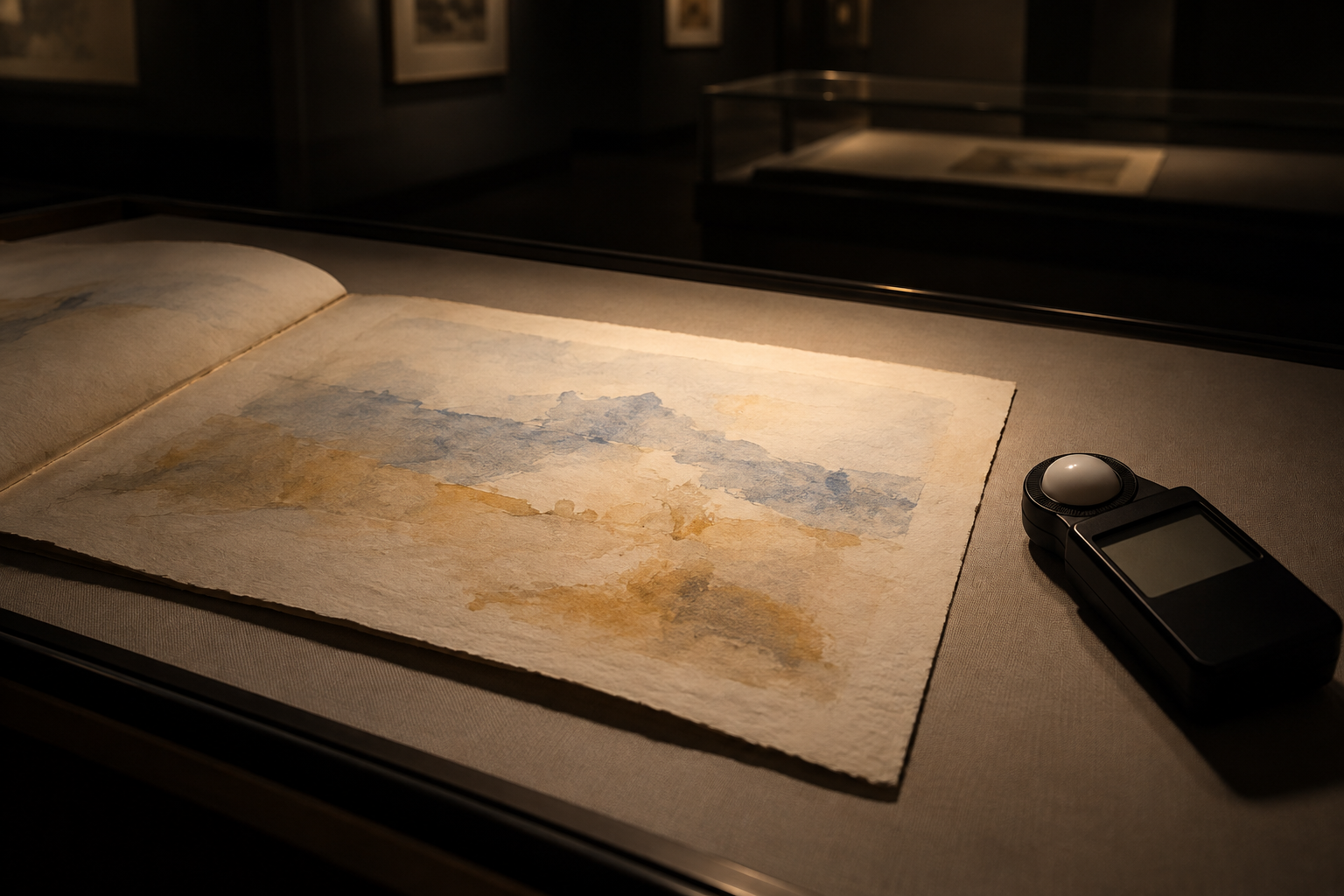
Rotation also makes an ethical negotiation visible. Public access requires light; the surviving material has limited tolerance for exposure. Showing less at a time can make more of the object available over a longer period. That is a curatorial argument about duration, not a failure to present the whole work adequately.
What stronger color can teach
A reverse view can change our imagination of the past in an instant. It suggests that age has a visual style of its own, one we may mistake for an original artistic preference. But the proper response is curiosity, not a demand that every front be made as bright as possible.
The case for restraint follows from the object. Its fibers, dyes, repairs, and mounting form a connected system. A conservation choice has to respect that system while explaining which effects are original, altered, or newly supplied. Stronger color is one valuable clue within it.
The back of a tapestry offers a different angle on a shared history. It may preserve contrasts the front has lost, expose past repairs, or reveal how the weaving holds together. Its greatest gift is not an unmediated past. It is a reminder that the side we normally see has never been the whole object.
A thought worth keeping?