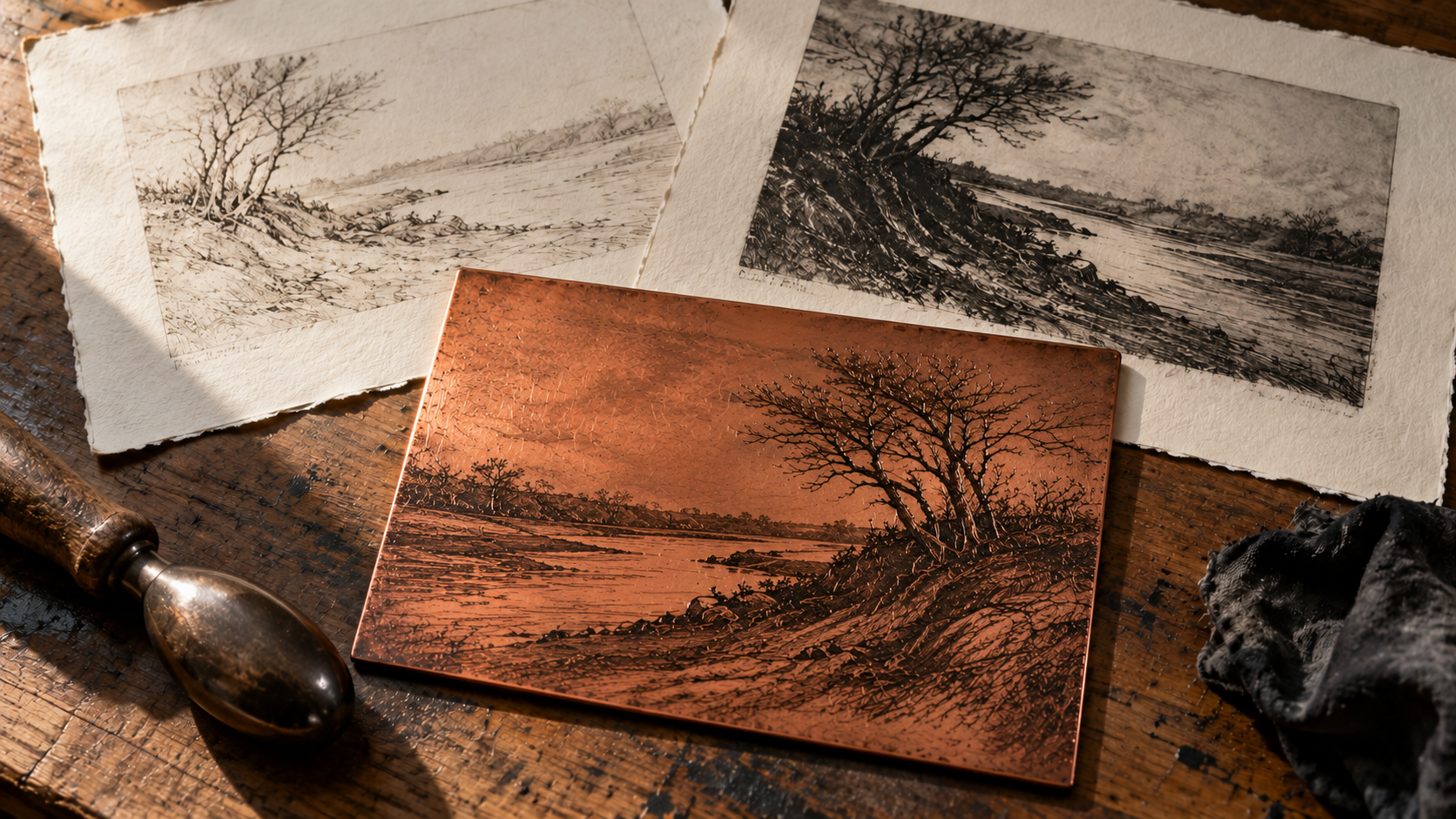
Two impressions from the same printing plate need not be the same picture in any useful aesthetic sense. One can be light and open; another can turn the same arrangement of figures into a dark, enclosed scene. The difference may come partly from changes cut into the plate, but it can also come from ink left on its surface and the material receiving it.
Rembrandt's prints make this hard to ignore. They ask us to stop treating the plate as a machine that stores one finished image and starts making copies. A plate can instead be a place of revision, variation, and wear. Its impressions record particular encounters with it, rather than simply repeating an invariant design.
The burr carries part of the picture
In drypoint, a point scratches directly into metal, raising a burr beside the line. That burr retains ink and can produce a rich, soft effect. It is also vulnerable to wear during printing. Wendy Thompson's Metropolitan Museum essay on drypoint explains the technique's expressive attraction and its limits for producing many consistent impressions.
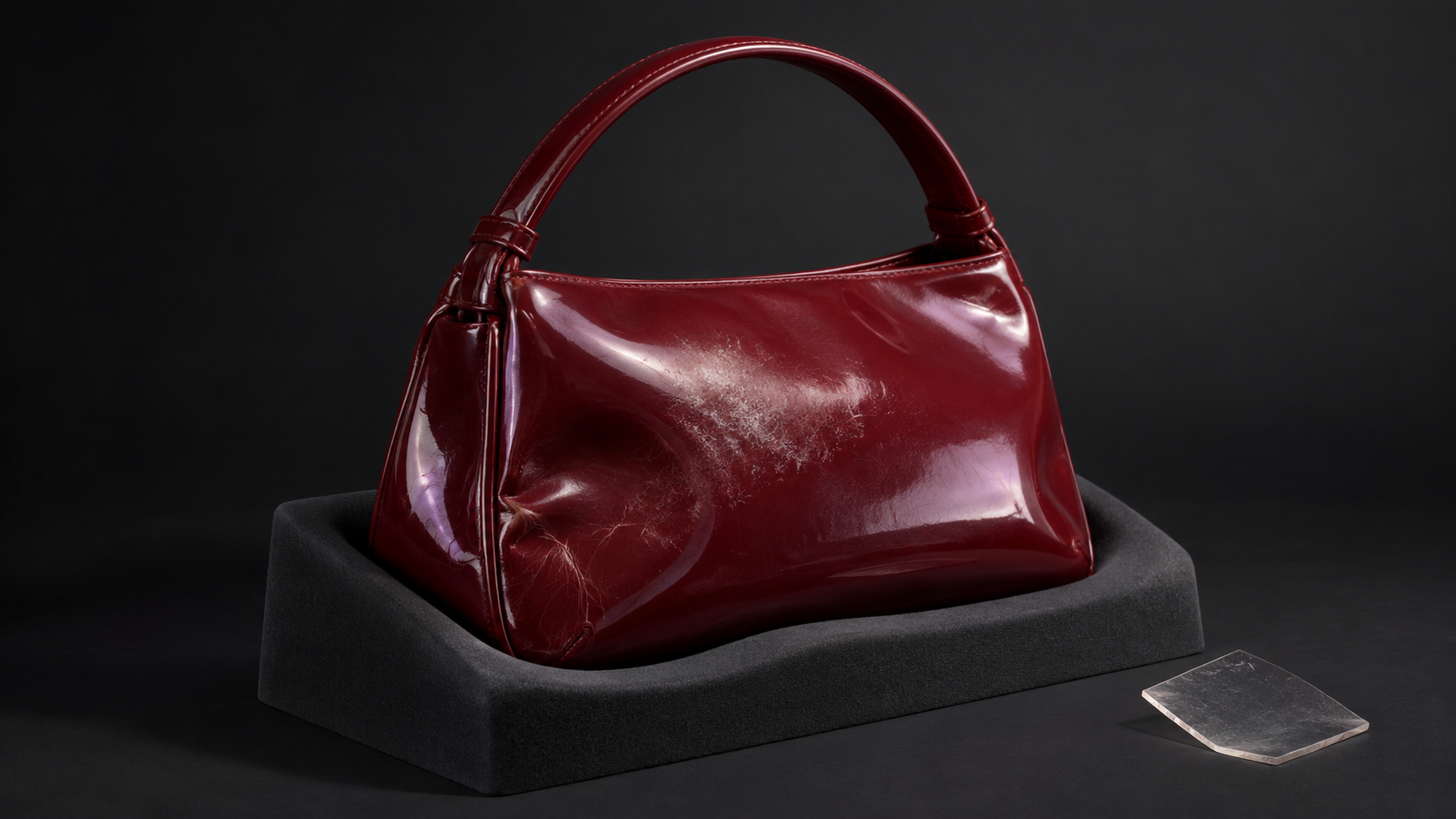
This makes wear more than a question of whether the plate remains physically present. A plate can survive after a feature essential to its earlier printing behavior has changed. The metal is there; the capacity to produce a particular kind of line may be diminished.
The relationship between artifact and action becomes unusually visible here. A printmaking matrix is an object designed to do something. Its historical significance includes that function, yet repeatedly exercising the function can change it. Keeping a plate and continuing to print it are therefore different preservation choices.
There is no numerical rule in this observation that dates an unidentified impression by looking at darkness alone. Ink, wiping, paper, and deliberate working can all affect appearance. The lesson is to recognize a variable worth investigating rather than use a visual impression as an instant authentication test.
The ink between the lines
The Met's record for a second-state impression of The Entombment, dated around 1654, emphasizes the veil of ink Rembrandt left on the plate. Selective wiping produces highlights while retained surface ink darkens other areas. The museum explains that these choices make individual impressions distinct. The collection record for this impression directs attention to printing as an act of image-making.
That act complicates a familiar opposition between handmade originals and mechanically reproduced images. A reproducible matrix does not eliminate handwork or variation. The printer's choices can operate across the entire scene, even where the plate's incised lines remain unchanged.
It also changes what a catalog image represents. If a book illustrates The Entombment with one impression, that image may become our default memory of the work. Yet another impression can carry a different balance of light and shadow. The reproduction can be accurate to the selected sheet while offering only one answer to the larger question of what the work looks like.
Calling the selected sheet simply “the print” hides that distinction. A fuller description identifies the impression and the condition or state of the plate from which it came. The extra precision serves a visual purpose: it helps explain why another legitimate example may surprise us.
A support changes an atmosphere
The Met's record of The Three Crosses on vellum explains the effect of its comparatively less absorbent surface: ink remains more on the surface, softening lines and enriching the image. It also identifies areas of deliberately retained ink. The museum's record for the vellum impression treats the support as an active contributor to the result.
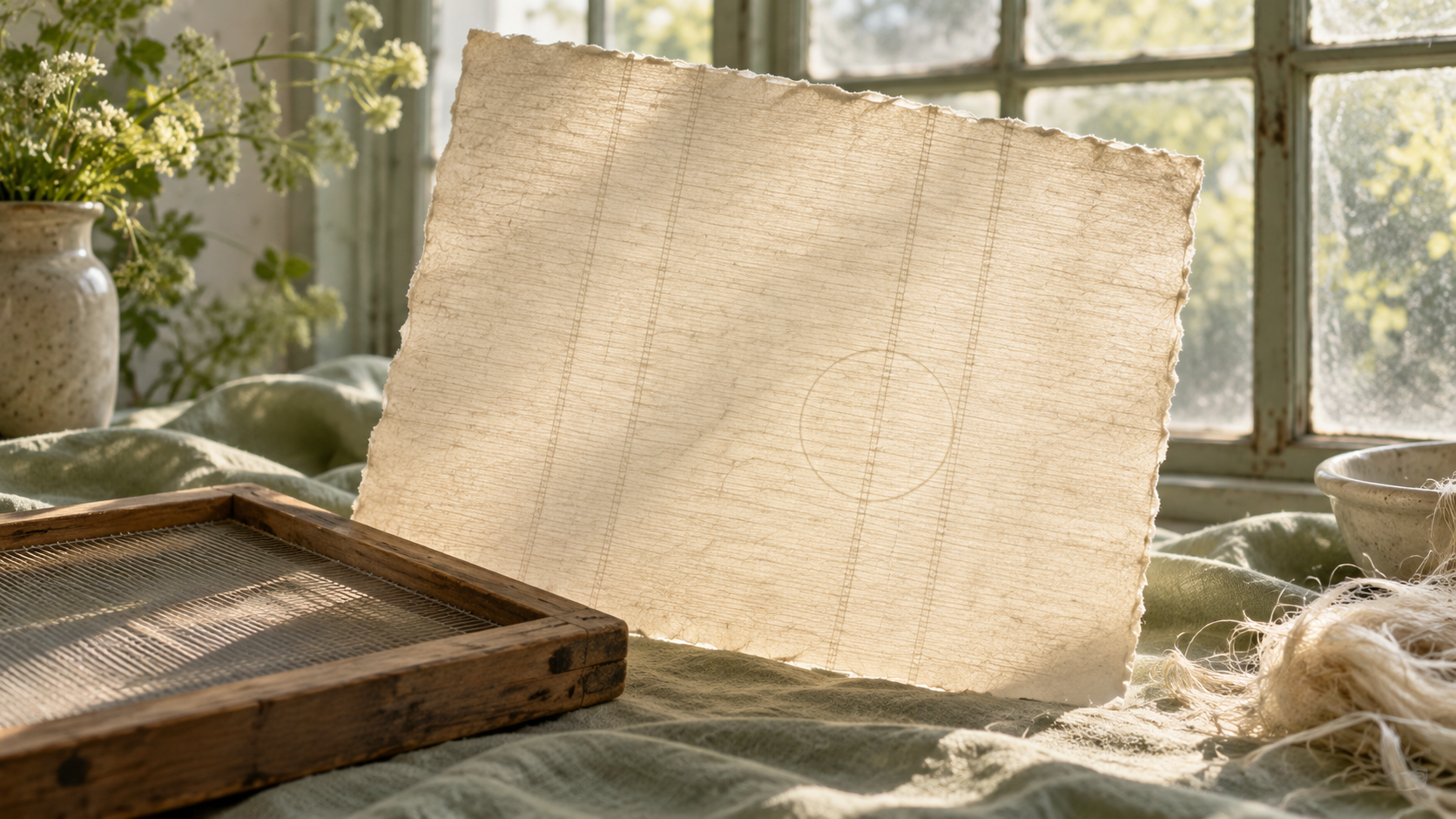
The inference is that a supposedly neutral background is not neutral. A photograph reproduced at the same dimensions on a uniform screen can make two sheets seem more interchangeable than they are. Surface, absorption, and tone shape the encounter with ink in ways that a small reproduction may compress.
None of this requires rejecting digital access. A good digital record can make comparison possible across collections that most readers could never visit together. The point is to retain the material description alongside the image, so that increased access does not quietly replace distinct objects with a single generalized picture.
Revision does not have to culminate
Nadine Orenstein's Met essay on Rembrandt's prints describes substantial reworking in later prints. For a fourth state of The Three Crosses, Rembrandt scraped and polished away portions of the earlier composition before adding new figures and hatching. The essay also discusses changes to Christ Presented to the People, including the removal of foreground figures in a later state.
A later state is not automatically a simple improvement on an earlier one. It is evidence that the plate continued to be a site of decisions. A changed composition can create a different narrative emphasis and a different relation to the viewer. Preserving earlier impressions gives us access to alternatives that the surviving plate alone cannot supply.
This is why the language of progress can mislead. If we arrange states only as steps toward a definitive finish, we risk treating earlier printed images as disposable rehearsals. The surviving sheets allow us to see that revision can produce several compelling works from one material sequence.
What does the matrix preserve?
A plate preserves marks and material history. An impression preserves one outcome of printing at a particular moment. Neither fully substitutes for the other. The plate may retain evidence of working that is difficult to see in an impression; the impression may retain an appearance the altered plate can no longer produce.
The distinction offers a better way to understand print collections. Multiple examples need not be redundant possessions of the same picture. They can be records of different states, supports, and printing choices. Their value for study emerges in relation to one another.
The most interesting question is consequently not whether printmaking is truly original or merely reproductive. It is how an image takes form through a sequence of repeatable and unrepeatable acts. Rembrandt's plates and impressions keep that sequence open to inspection. Repetition is the condition that lets us notice difference.
A thought worth keeping?